


Photographed Plumbing Work in Racine and Mt Pleasant, WI
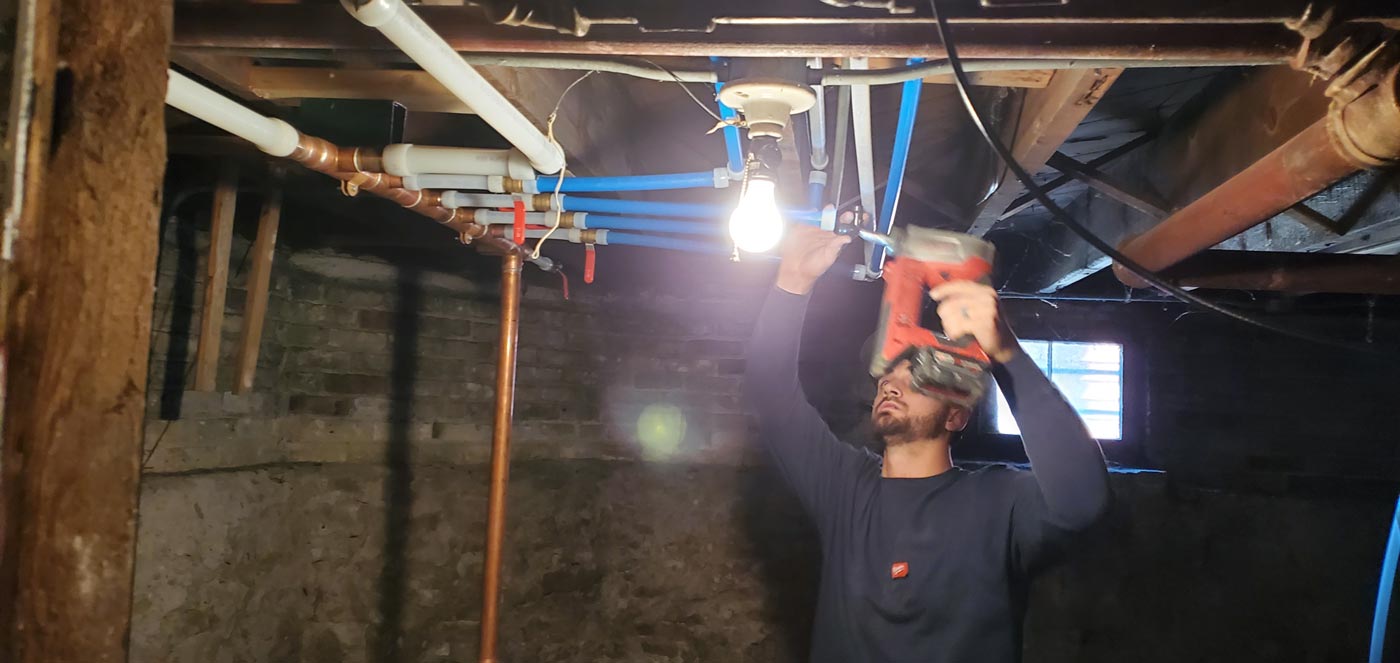
Every photograph on this page came off a phone at one of our own jobs. None of it is purchased stock, and none of it is a manufacturer's press shot. Where a job was documented from start to finish, the sequence is shown in order rather than reduced to the tidy final frame.
Captions explain what you are looking at, because an installation photograph is only useful if you can tell the difference between good work and work that merely looks finished.
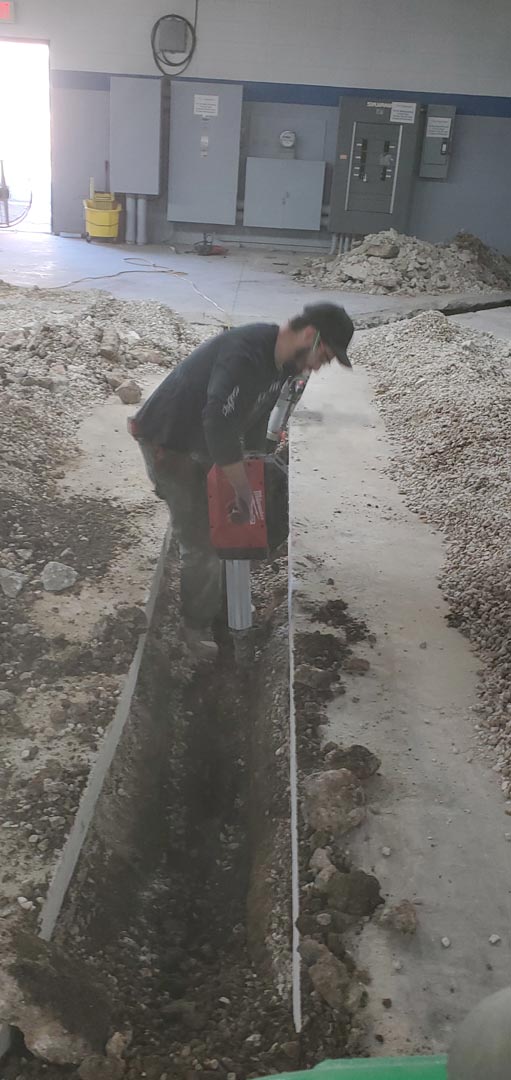
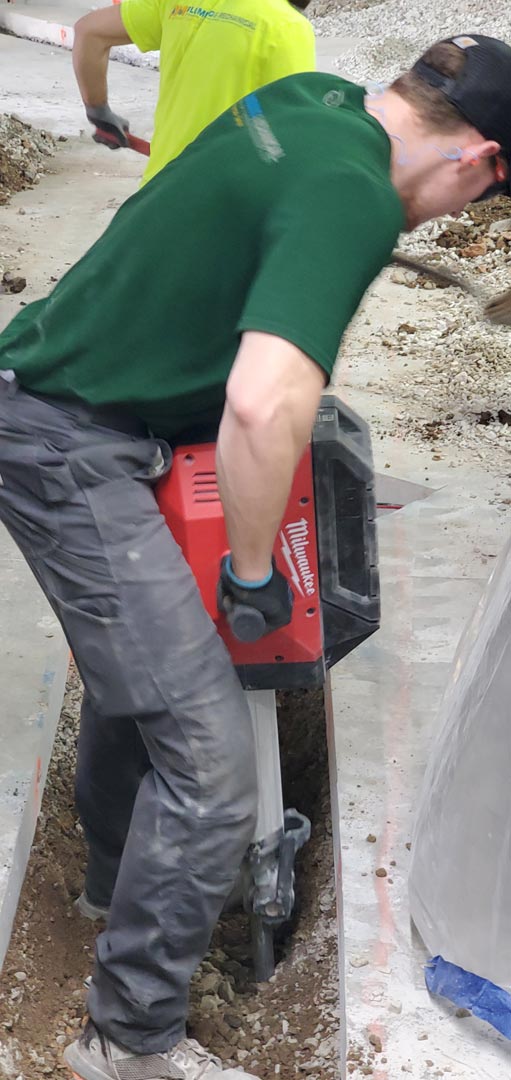
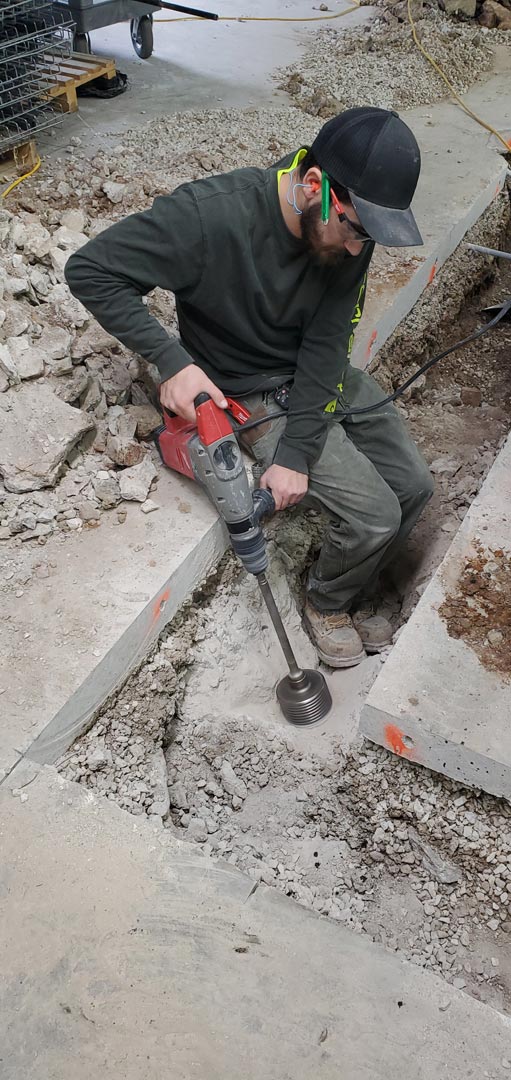
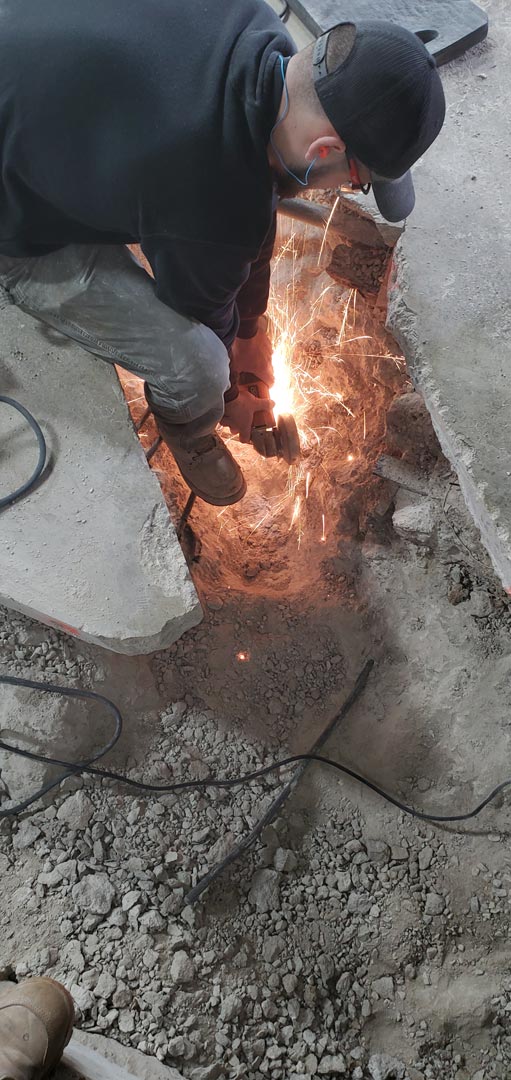
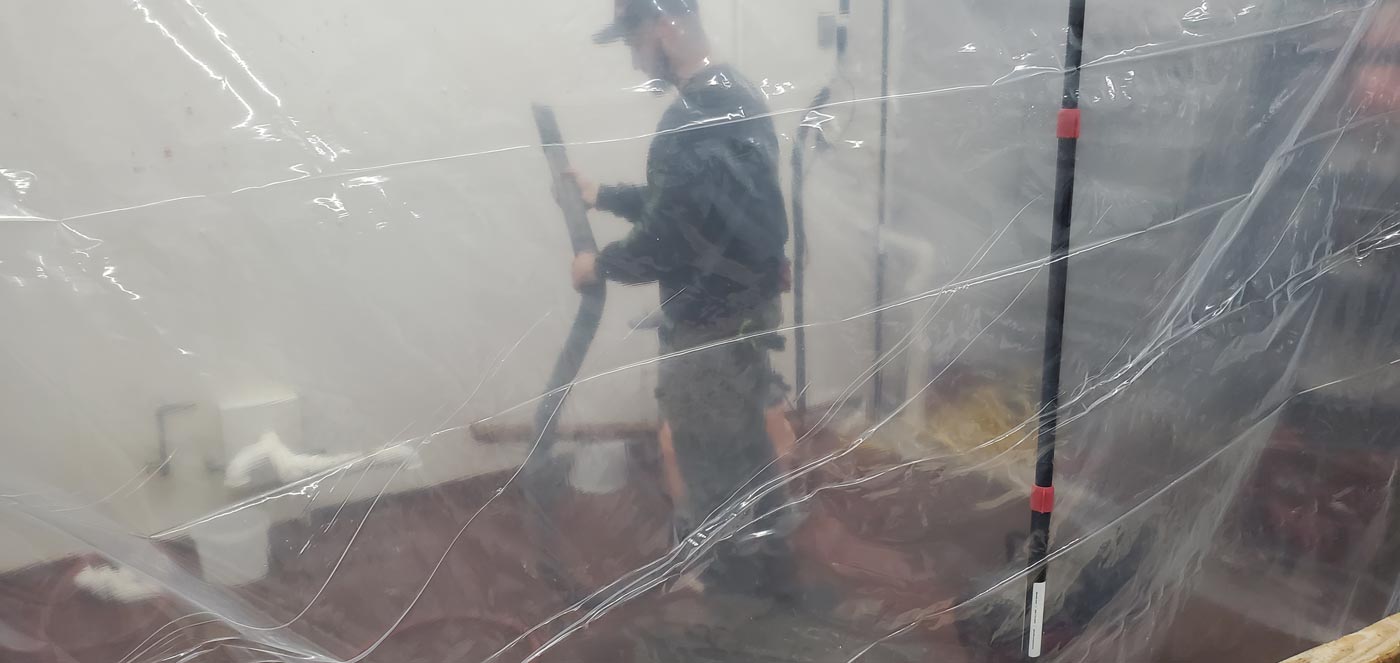
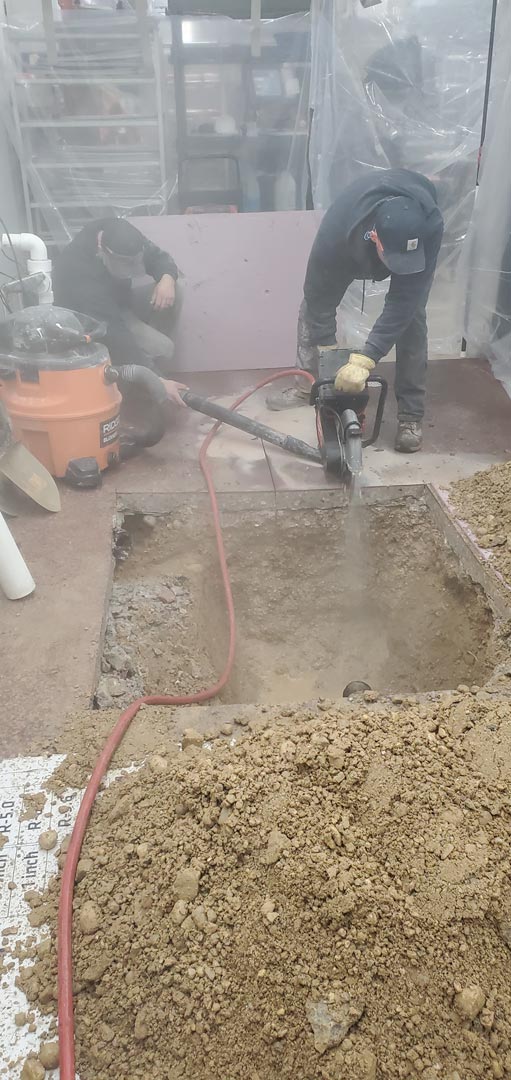
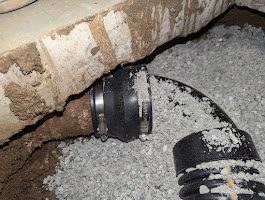
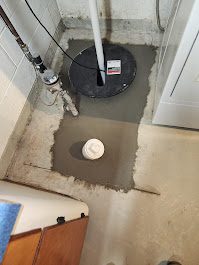
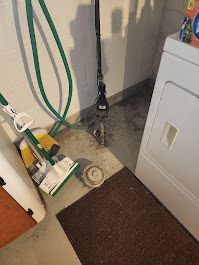
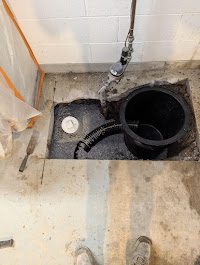
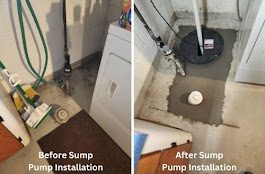
A Sump Pump Cut Into a Basement That Never Had One
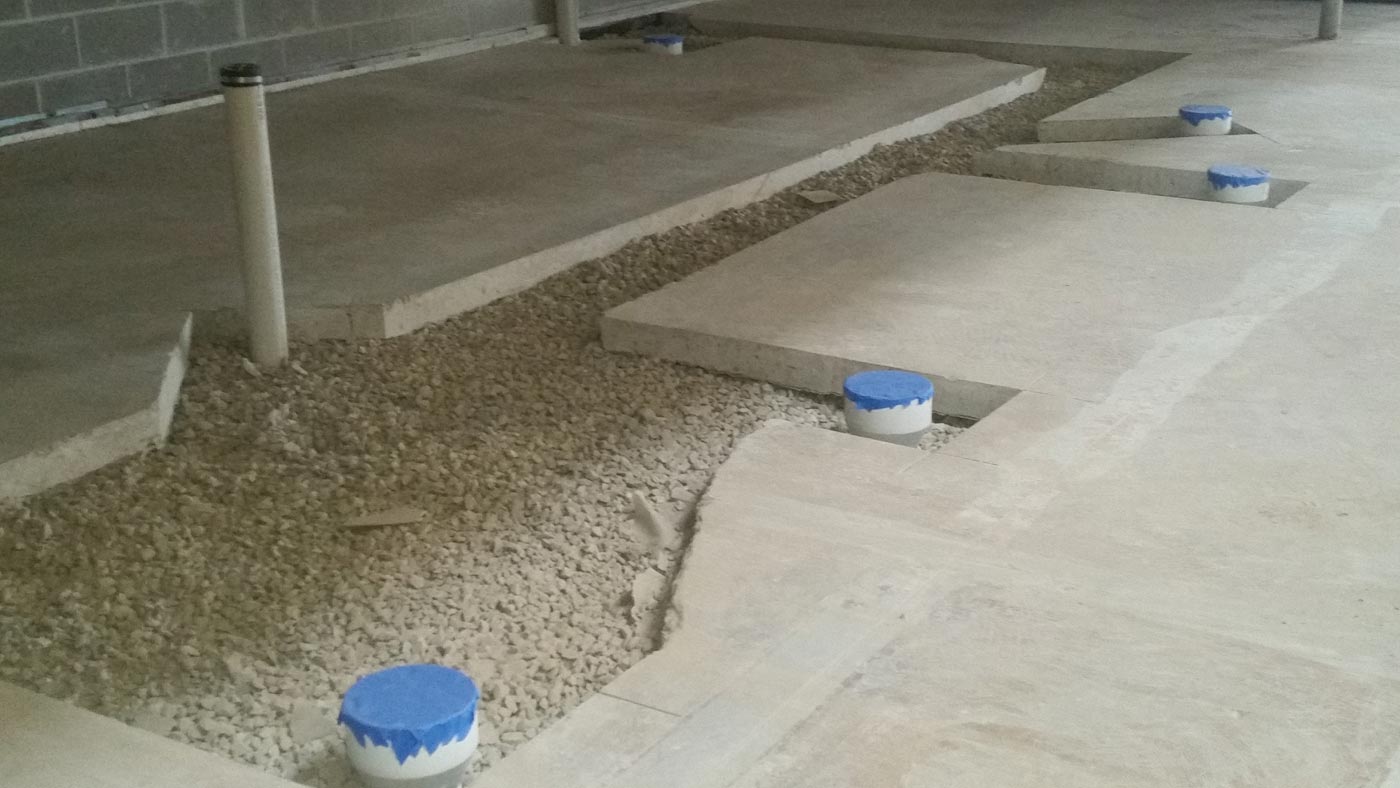
This is the job most homeowners are quoted for without ever seeing what it involves. The basement had no pit at all, so the concrete had to be opened, a basin set below slab level, drainage brought into it, and the floor made good again. Four stages, photographed in order.
Two details in that last frame are worth naming because they are the ones commonly skipped. The lid is sealed rather than loose, which keeps soil gas and humidity out of the room, and the cleanout was brought up flush instead of being concreted over — a decision that costs nothing on the day and saves an hour of breaking concrete the next time the line needs rodding. The full method is set out on the sump pump installation page.
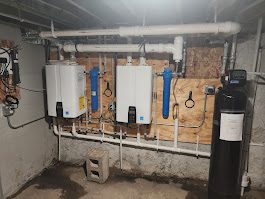
Two Tankless Heaters and a Filtration Bank on a Private Well
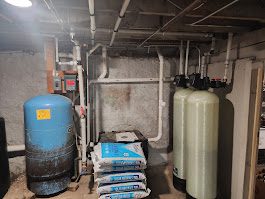
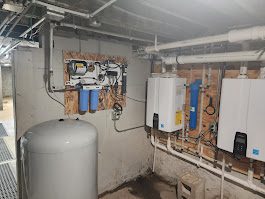
Properties outside the sewered and metered footprint get a mechanical wall rather than a single appliance. This one carries a pressure tank, a cartridge filtration bank, a softener, and two wall-hung tankless heaters working in tandem, all fed from a private well.
The reason it is built as a wall rather than a stack is serviceability. Every cartridge housing, valve, and control panel in these photographs can be reached standing up, and any one component can be isolated without shutting the whole house down. That layout takes longer to install and is the difference between a twenty-minute filter change and an afternoon.
Two heaters instead of one is not oversizing. On a well supply the incoming water is colder in winter than a municipal main, so a single unit that is adequate in July can fall behind in January; a pair shares the load and either one can be taken out of service without leaving the house cold.
Softening ahead of the heaters is deliberate rather than optional here. Hardness that would merely shorten the life of a storage tank will foul the heat exchanger of a tankless unit far faster, because the water is heated across a narrow passage instead of in a large vessel.
Salt storage placed at floor level beside the tanks is a small courtesy that gets designed in. A softener installed where bags have to be lifted over piping is one that stops being refilled, and a softener that stops being refilled takes the heaters down with it inside a few years.
If your supply is a private well rather than a municipal main, the water heater service page covers how that changes both the sizing and the maintenance interval.
Commercial Water Heating, Gas Piping, and Plant Rooms
Commercial plant is judged on different criteria from a domestic install. Clearances have to satisfy an inspector, gas piping has to be supported and identified, and every isolation point has to be operable by somebody who did not install it.
The room photographed here carries high-capacity storage heating with copper distribution and marked gas connections. Nothing about it is decorative: the valve positions, the union placements, and the routing all exist so that a single component can be changed years later without dismantling the rest of the plant.
This category of work covers restaurants, small industrial units, apartment buildings, and municipal facilities across the county, and it is set out in full on the commercial water heater page and the boiler installation page.
The Half of the Job That Happens Outside
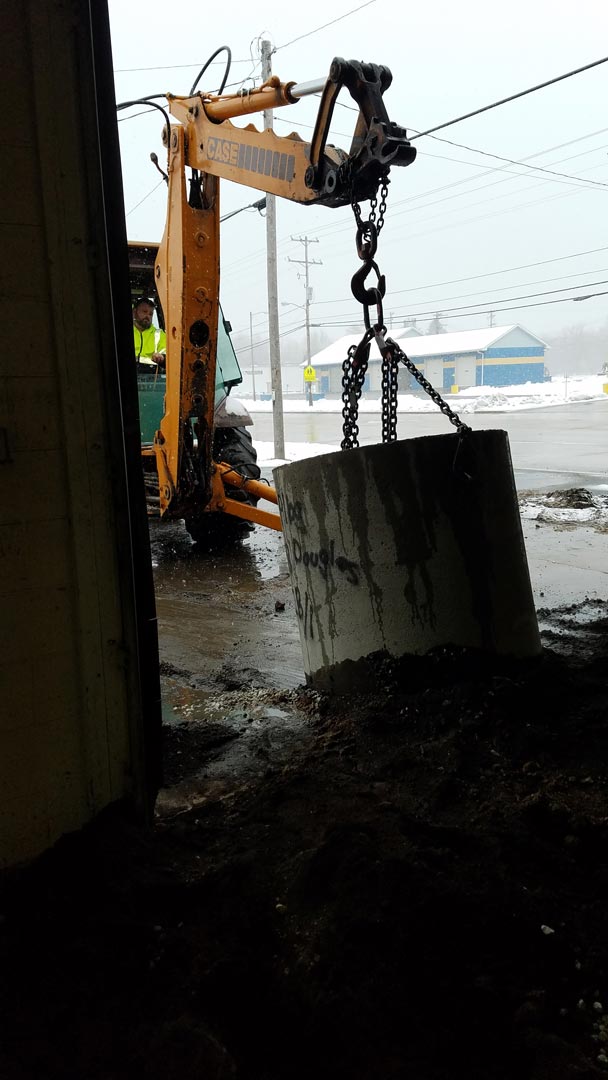
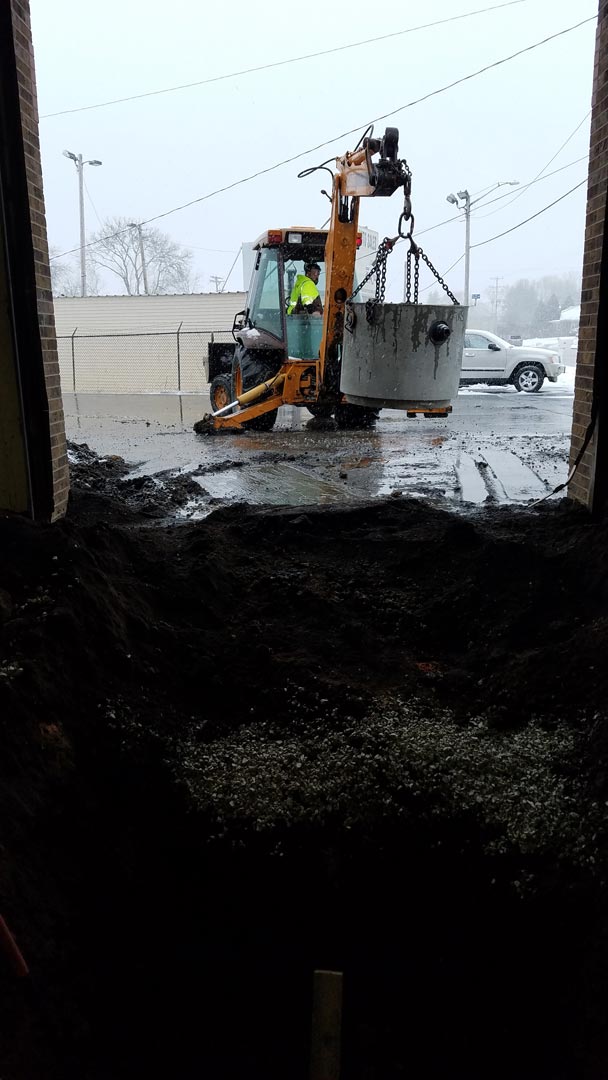
Sewer laterals, water services, and storm lines are the jobs nobody photographs for a brochure, because the finished result is a patch of ground. They are also where the largest sums are spent and where the quality difference is least visible afterwards.
What can be judged from a photograph like this one is the bedding and the backfill. Pipe laid on stone and surrounded by stone stays where it was put; pipe dropped onto clay and covered with the spoil that came out of the hole settles unevenly, and an uneven buried line is precisely how a belly forms and the blockages start.
Before any of this is quoted, the line gets looked at. A recorded camera survey with a located depth is what turns an opinion about a buried pipe into a defined scope, and it is the step that decides whether the ground needs opening at all.
How to Read a Plumbing Photograph Before You Hire Anyone
Contractor galleries are easy to fake and easier to flatter. Four things are worth looking for in anybody's photographs, including ours.
- Can you see the joints, or only the finished face? A gallery of shiny fixtures and no pipework is showing you the part a decorator could have done. The connections behind them are where the trade actually is.
- Is anything isolated? Serviceable installations have valves at every branch. If a photograph shows a heater or a filter with no way to shut it off on its own, changing it later means shutting off the building.
- Is the work supported? Pipe hanging on its own fittings will eventually pull a joint apart. Straps, clips, and stands are dull and they are the first thing a cheap install leaves out.
- Does the surrounding area look worked in or wrecked? Fresh patching, swept floors, and no offcuts left behind say more about what a week with that contractor will be like than the plumbing does.
Apply those four questions to every image above. They are the reason the frames on this page include the trench, the coupling, and the plant room rather than only the tidy corner at the end.
What Backs Up the Photographs
- Trading since
- 1995
- Wisconsin Master Plumber
- License #225457
- Google rating
- 4.8 stars across 51 reviews
- Photographs on this page
- 8, all from our own jobs
Photographs are the weakest form of proof on their own, because anyone can post anyone else's. What makes these checkable is that the sump sequence is one continuous job in one room, the well-supply frames are two halves of a single basement, and the equipment in each is consistent from frame to frame.
The license number above is searchable, the rating is public on the business listing, and the shop is a physical address in Mt Pleasant rather than a call-center postcode. If a photograph here raises a question about how something was done, ask it — that is a better use of a phone call than a general inquiry.
There is more of this work than fits one page. Jobs are photographed as they are finished, and the archive is added to rather than curated backwards.
Questions About the Work Shown Here
Are these your own jobs, or supplied images?
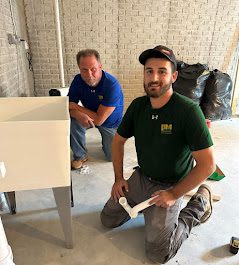
All of them are ours, taken on site by the people doing the work. That is why several are phone photographs in poor basement light rather than studio shots. We would rather show a genuine trench in bad lighting than a purchased image of somebody else's tidy plant room.
Can I get a job like the sump installation quoted from these photographs?
Not accurately, and it would be unfair to pretend otherwise. Slab thickness, where the discharge can legally go, and whether drainage already exists around the footing all change the number substantially. What the sequence does tell you is exactly which stages you are paying for, so a quote can be compared line by line.
Do you photograph every job?
Most installations and anything that gets covered up, because a photograph of a connection before the concrete goes back is worth having on file for both sides. Routine repairs usually are not. If you would like the work at your property documented, say so when it is booked and it will be.
Will you take on the outdoor excavation work as well, or subcontract it?
Machine excavation for water services, sewer laterals, and storm lines is part of what this shop does rather than something handed to a separate crew. The plumbing license and the person responsible for the buried line stay the same from the survey through to the backfill.